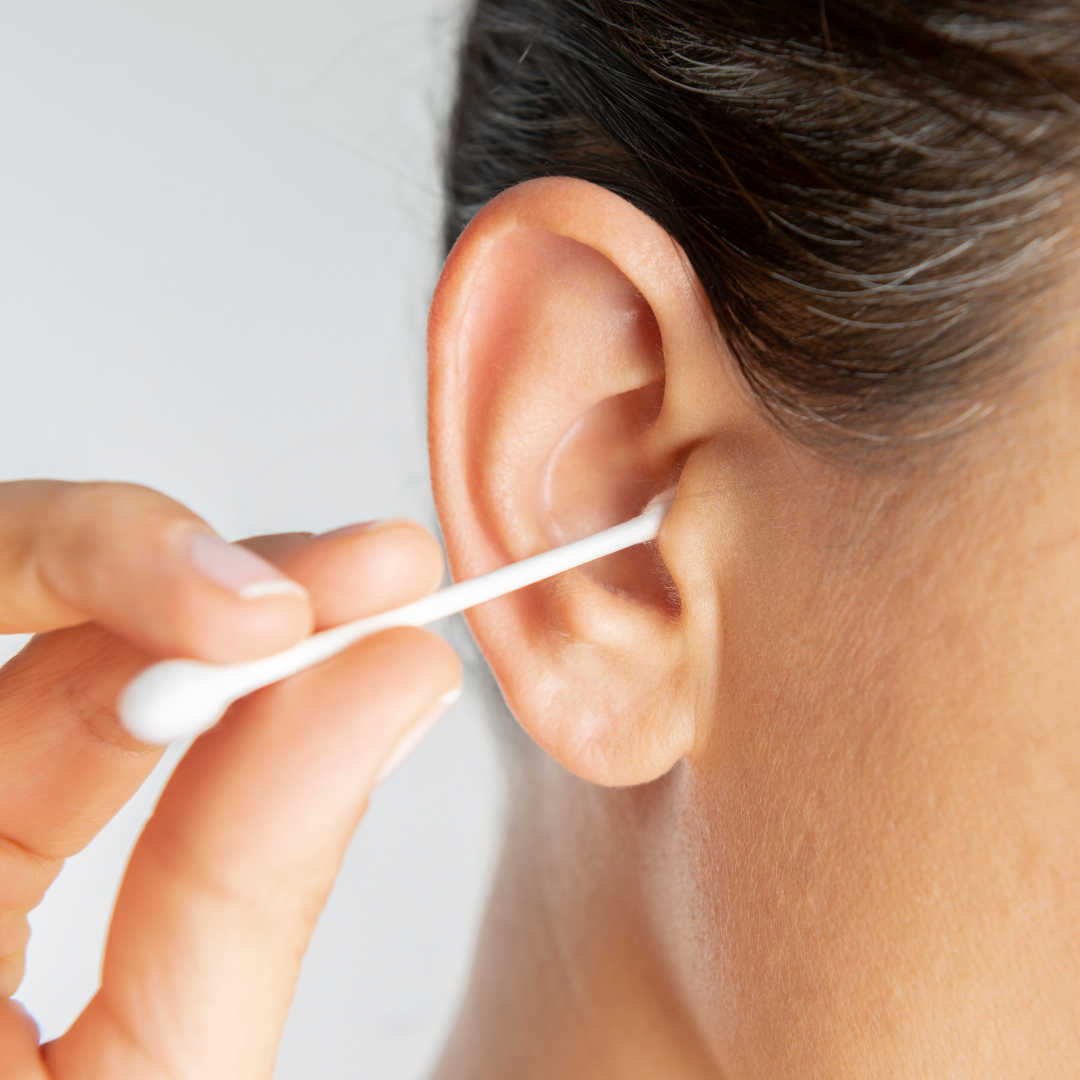
Cotton swabs may seem like convenient ear-cleaning tools, but inserting one into the ear canal can make cleaning harder over time and may damage your ears. Our audiology team evaluates whether cerumen accumulation requires clinical extraction and suggests techniques tailored to your auditory health. The auditory canal generally manages its own cleaning; however, should impaction arise, our team provides safe clinical earwax removal.
Why Cotton Swabs Create Complications Inside the Ear
In audiology, earwax (cerumen) is recognized as a vital protective substance rather than dirt. It traps dust and debris, helps limit bacterial growth, lubricates the ear canal, and protects its sensitive skin. Standard jaw mechanics and lateral skin shedding propel oxidized wax toward the outer meatus, allowing it to dry and wash away during daily washing.
A Q-Tip placed inside the canal can disrupt this self-cleaning process. Even if the swab gathers a trace of surface cerumen, it routinely compacts the remaining mass against the eardrum. Habitual use tends to compress wax into a stubborn plug, producing an uncomfortable blocked feeling that prompts further harmful scrubbing.
Cotton applicators are suitable for tracing the exterior folds of the ear, but they must remain entirely outside the canal opening.
Clinical Complications Associated with Q-Tip Insertion
Canal skin is thin, vascular, and highly vulnerable to mechanical abrasions. Minor physical scratches induce pain, trigger localized bleeding, and invite bacterial colonization, increasing outer ear infection rates. A cotton tip may also detach and remain inside the canal.
Potential audiological complications include:
- Earwax compressed tightly against canal walls
- Canal abrasions, dermal irritation, edema, and hemorrhage
- Secondary bacterial otitis externa
- Retained cotton tip or foreign object obstruction
- Ruptured, torn, or perforated tympanic membrane
- Trauma inflicted on the ossicular chain behind the eardrum
- Sudden alterations in auditory acuity or permanent hearing changes
- Acute tinnitus, vertigo, or intense otalgia
Even though major trauma is uncommon, someone bumping your arm, a sudden hand slip, or deep over-insertion can cause severe damage.
Recommended Schedules and Timelines for Cerumen Removal
Most individuals do not need to perform earwax maintenance on a calendar schedule. Physiologically stable ears continuously migrate wax outward, while standard showering takes care of the visible ear. Frequent overcleaning creates dry, irritated canal surfaces while amplifying the risk of severe impaction or microbial invasion.
Intervention becomes necessary whenever wax creates an anatomical blockage, obstructs otoscopic examination, disrupts hearing aid operation, or causes aural distress.
Safe Protocols for Managing Cerumen at Home
In the absence of earwax symptoms, allowing natural physiological clearance is universally the safest strategy. Simply cleanse the external ear using a damp, gentle washcloth, allowing the internal canal to clear independently.
When dry wax demands pre-treatment, we often advise using an OTC cerumenolytic solution or drops composed of glycerin, mineral oil, carbamide peroxide, or saline. Use only the labeled amount and for the labeled duration. Cease use at once if you experience localized pain, acute vertigo, cutaneous rash, or intensifying discomfort.
Performing irrigation at home is unsafe for certain individuals and must only proceed after a clinician verifies ear safety and explains the protocol. You must never employ high-pressure dental water jets for ear clearing. Refrain from using ear candles, rigid metal picks, DIY camera probes, hairpins, or commercial home suction kits. These products may burn, cut, puncture, or push wax farther inward.
Clinical Indicators for Professional Earwax Removal
Schedule a professional visit if the canal remains occluded after softening treatments, cerumen appears deeply lodged, or home remedies fail. Professional intervention is highly advisable for individuals with mobility challenges, narrow ear canals, hearing aid devices, or surgical backgrounds that make home care dangerous.
Request an immediate diagnostic examination for:
- Sharp ear pain, chronic itching sensations, or localized tenderness
- Blood, cloudy purulence, clear fluid leaks, or foul-smelling ear discharge
- Fever combined with visible swelling or redness around the ear
- The rapid emergence of tinnitus or episodic dizziness
- Hearing loss that develops suddenly or continues after wax removal
- Any concern of a ruptured eardrum or detached cotton swab tip
- Persistent impactions interfering with hearing aid operation
A sudden reduction in one ear’s hearing demands emergency evaluation rather than an assumption of wax blockage. Rapid audiological testing differentiates simple cerumen obstruction from serious, time-sensitive inner ear disorders.
Professional Techniques for Cerumen Removal
Our clinical team begins by evaluating the ear canal using an otoscope or binocular microscope to confirm cerumen impaction and inspect for infection, trauma, or tympanic membrane perforations. Choosing the safest clinical protocol relies on cerumen firmness, individual canal anatomy, medical records, otologic surgical history, and patient tolerance.
In-office clinical procedures include:
- In-office or pre-visit cerumen-softening drop applications
- Gentle, temperature-controlled fluid irrigation provided the tympanic membrane is intact
- Gentle micro-suction performed under clear binocular visualization
- Manual instrument removal utilizing specialized curettes, loops, or micro-forceps
Direct visualization allows the clinician to work around sensitive canal skin and stop if discomfort occurs. Utilizing more than one removal technique may be necessary to resolve dry or severely compacted wax. After removal, the ear can be reexamined to confirm that the canal and eardrum are healthy. If post-cleaning symptoms such as fullness, tinnitus, unsteadiness, or hearing reduction persist, specialized testing can locate the primary cause.
Request an Appointment for Clinical Earwax Removal
Should your ears feel congested or your hearing performance decline, arrange an evaluation with our audiology clinic instead of reaching for swabs. During your consultation, we examine current symptoms, prior ear surgeries, hearing aid habits, home remedies, and physiological factors that drive wax accumulation. Contact our office directly to book your safe cerumen-removal appointment.
