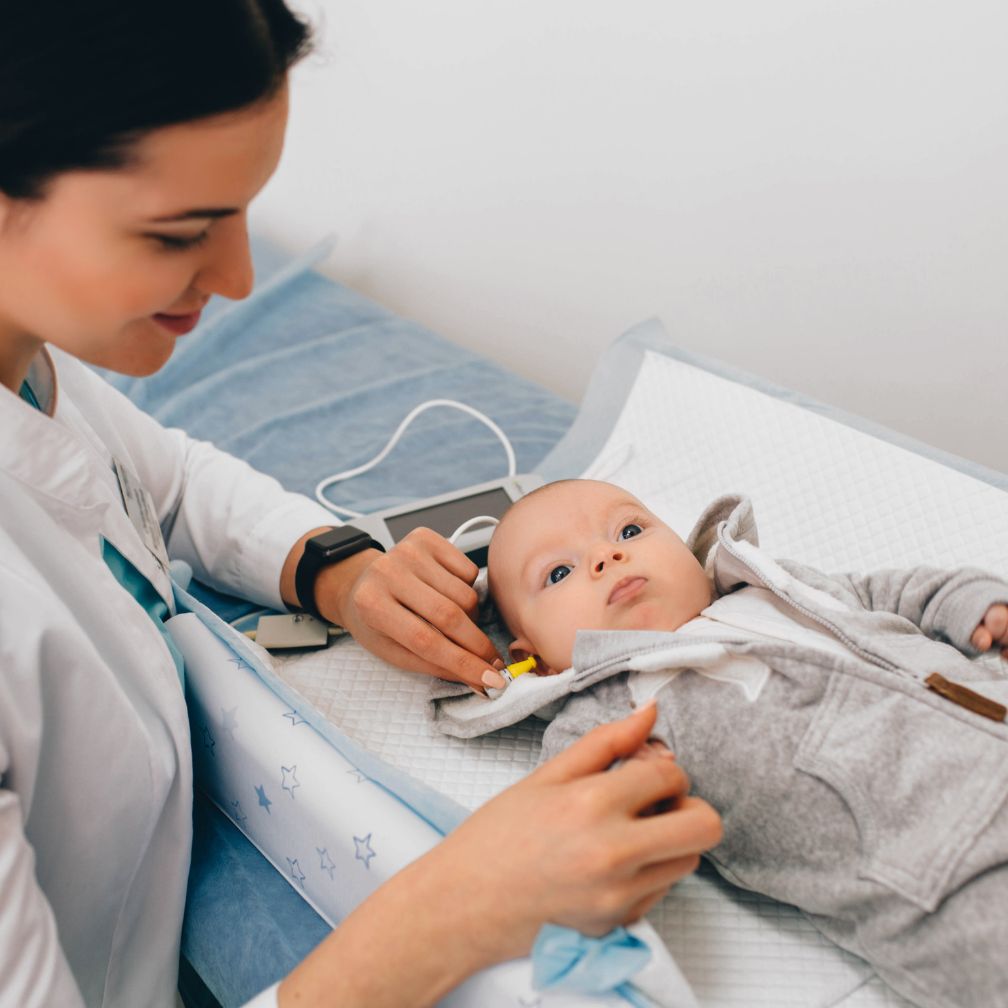
For mothers and fathers with newborns, realizing their child experiences hearing impairment often feels deeply disheartening and sad. Yet the positive perspective remains that via early care and screening, infants experiencing hearing loss can genuinely thrive over time. Beyond doubt, these children can build speech patterns, relational abilities, and robust connections with their society, experiencing a wonderful life!
Relying on modern hearing aids and advanced cochlear implants yields two reliable clinical methods for supporting babies with hearing impairment. In the passage below, we evaluate their functional mechanisms and clarify how to select the ideal match for your infant.
Understanding Infant Hearing Loss
Auditory loss in newborn babies can trace back to multiple potential origins, including:
- Distinct genetic variations (even among ancestral lineages lacking hearing loss history)
- Congenital pathogen exposures like cytomegalovirus (CMV) and rubella agents
- Intrapartum events, including fetal oxygen deprivation or early delivery
- Selected pharmaceutical treatments deployed inside specialized newborn intensive units
What matters above all else? Early diagnosis. Because of these standards, babies delivered in United States hospitals complete hearing screens prior to leaving the maternity unit. Pediatric audiology specialists consistently follow the official “1-3-6” operational timeline:
- Primary screening executed within 30 days of birth
- Formal diagnostic verdict achieved inside 90 days of life
- Early therapeutic care (utilizing personal devices or developmental therapy) initiated by 6 months of age
Meeting these diagnostic benchmarks grants babies an ideal foundation for strong speech, linguistic, and brain development. Should you require assistance regarding these auditory screens, your primary pediatrician remains ready to assist you!
Wearable Hearing Aids in Infant Care
For young children demonstrating mild to severe hearing challenges, pediatric hearing aids typically serve as the initial intervention option. These compact, external instruments amplify surrounding audio, helping babies process spoken dialogue and everyday sounds more distinctly.
Certified pediatric-grade hearing devices stand as:
- Fully cleared and safe for infants only a few weeks old
- Built using flexible, comfortable ear impressions that update as the baby matures
- Equipped with secure battery housing closures and child-focused protective features
- Individually calibrated by an experienced pediatric audiologist to mirror your infant’s unique auditory curve
While your infant develops, these devices demand ongoing professional tuning to guarantee physical comfort and optimal performance.
Understanding Cochlear Implantation for Babies
When an infant presents with profound to severe sensorineural hearing impairment and derives limited success from conventional hearing aids, clinical teams frequently recommend a cochlear implant. In contrast to traditional hearing devices, cochlear implant systems:
- Entail precision surgical insertion inside the inner ear delivering direct electrical signals to the brain
- Completely circumvent non-functional elements inside the cochlear pathway
- Convert sound into electrical signals that stimulate the auditory nerve directly
Specialized pediatric cochlear implants act as:
- Granted official FDA clearance for young patients reaching 9-12 months of age
- Most successful when paired with early habilitation programs and active home engagement
- Recommended solely following extensive diagnostic reviews by a pediatric audiologist and ENT specialist
This evaluative framework encompasses neuroimaging scans, objective hearing assessments, and open dialogue concerning long-term communicative results.
Evaluating Hearing Aids Against Cochlear Implants
- Mild to severe hearing loss relies on Hearing Aids; Severe to profound hearing loss requires Cochlear Implants
- Non-Invasive external placement: Hearing Aids; Invasive surgical procedure: Cochlear Implants
- Traditional acoustic amplification: Hearing Aids; Direct conversion to electrical signals: Cochlear Implants
- Usage can begin in early infancy: Hearing Aids; Surgery can begin at 9-12 months: Cochlear Implants
Summary Thoughts: Supporting Your Child’s Hearing Journey
If your baby has been diagnosed with hearing loss, you have access to outstanding technological paths and plenty of support. With active assistance from pediatric hearing professionals, most children construct language skills that are on par with their peers.
Regardless of whether your baby requires wearable hearing aids or a surgical cochlear implant, taking immediate action creates a profound lifelong advantage.
Are you looking for clarity regarding your infant’s hearing development? Call our clinic today to schedule a thorough assessment and individualized management strategy.
