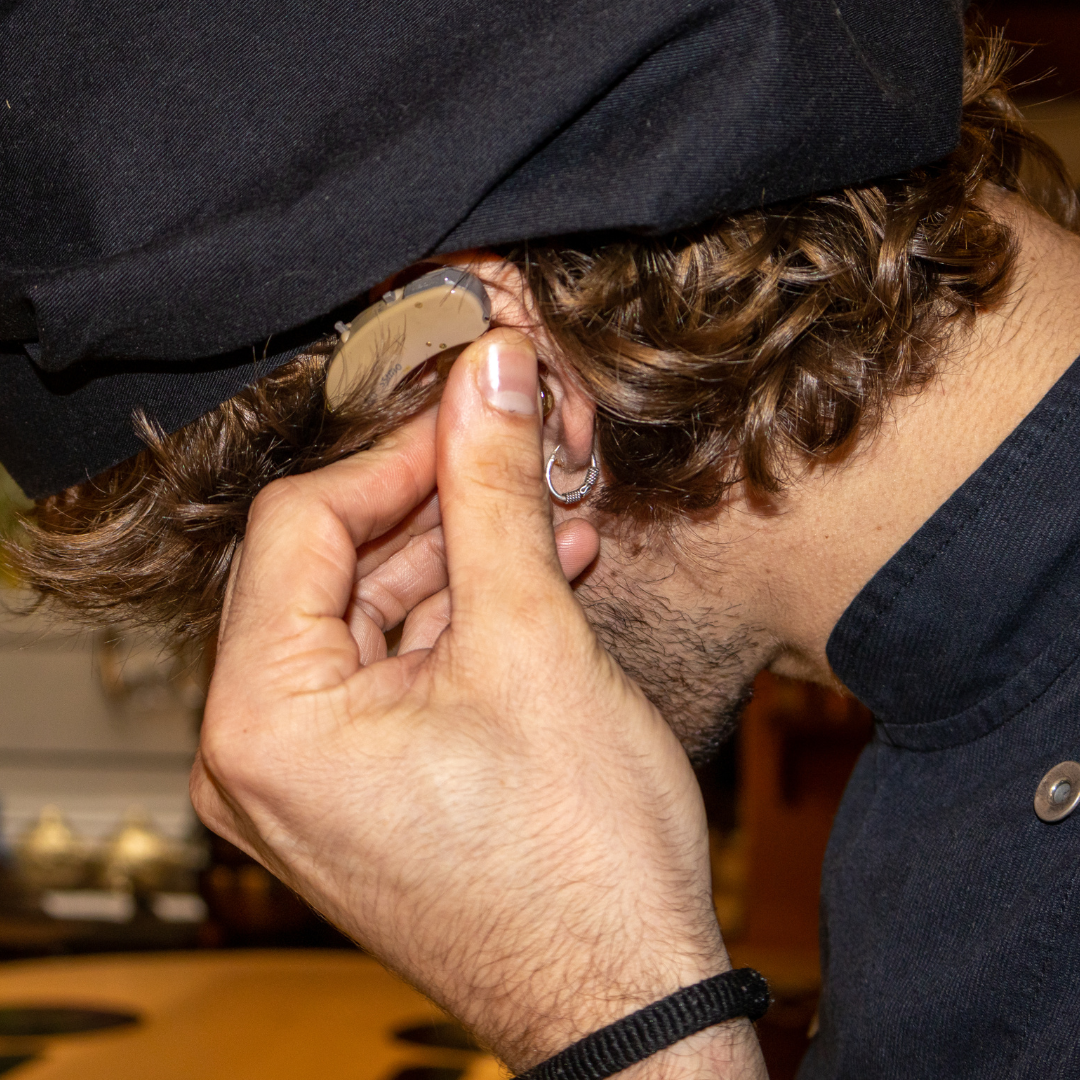
Maintaining dinner dialogue proves demanding when chaotic ambient noise strains your concentration and hearing. Our specialists can evaluate hearing under both calm and noisy listening conditions to establish why noisy rooms present such difficulty. As soon as we identify the physiological cause of your difficult hearing, we deliver personalized rehabilitation options.
Understanding the Contrast Between Quiet Hearing and Restaurant Noise
A quiet setting creates an optimal signal-to-noise ratio, ensuring the conversational partner’s voice rises cleanly above ambient sounds. Commercial restaurant spaces present the polar opposite acoustic dynamic. Layered diner voices, kitchen activity, foreground music, and room reverberation muddy speech signals, requiring intense mental strain to follow dialogue.
This symptom pattern often reflects underlying high-frequency hearing loss, central processing dysfunction, or physiological aging of the auditory nerve. Factors including listening fatigue, poor dining lighting, acoustic distance, and wandering attention make comprehension significantly harder. It is common to display normal baseline audibility on conventional hearing tests while failing comprehensive speech-in-noise testing. Communication breakdowns in loud restaurants should be professionally assessed even if one-on-one listening feels uncompromised.
Diagnostic Protocols for High-Frequency Hearing Loss
We initiate evaluation by exploring challenging acoustic environments, acoustic trauma history, subjective tinnitus, prescription drug profiles, and unilateral ear changes.
Pure-tone audiometric evaluations measure the absolute quietest sounds audible across specific octave frequencies using air and bone conduction. In high-frequency hearing loss, the audiogram reveals a sloping configuration where hearing acuity drops progressively as pitch frequencies increase. Further clinical diagnostics feature tympanometry to evaluate eardrum and middle-ear mechanics as well as word-recognition testing for speech comprehension.
Since sound-treated booths cannot replicate the chaos of a crowded dining room, speech-in-noise testing provides critical real-world insight. This diagnostic protocol measures your capacity to understand target words or sentences against progressively louder multi-talker babble. In combination, these diagnostic metrics reveal whether communication hurdles involve audibility thresholds, speech discrimination, neural noise management, or mixed conditions.
Adult Auditory Processing Disorders and Speech Perception
Auditory processing disorders interfere with the brain’s ability to process and decipher acoustic signals arriving from the ears. The ears may detect tones at expected levels, but the brain may have difficulty organizing competing signals, distinguishing similar speech sounds, or following rapid conversation. Our clinical team starts by examining peripheral auditory thresholds, subsequently deciding if an auditory-processing test battery or multidisciplinary consultation is necessary.
How to Improve Speech Clarity in Challenging Acoustic Environments
Strategic behavioral modifications can substantially improve the auditory signal reaching your ears while maximizing supportive visual cues. Before dining out, choose a quieter restaurant or visit during an off-peak time. Facilities equipped with upholstered booths, acoustic baffles, fabric curtains, carpeted floors, and soft materials prove far easier on hearing than minimalist, hard-tiled spaces.
While seated at the restaurant:
- Ask host staff for a quiet table distanced from kitchen traffic, bar noise, audio speakers, and loud group tables.
- Sit with your back near a wall to reduce noise coming from behind you.
- Position yourself directly opposite your companions where direct lighting highlights their facial expressions.
- Reduce physical spacing between yourself and companions to maximize direct speech perception.
- Position your better-hearing ear directly toward your main conversational partner.
- Encourage speakers to rephrase key information rather than simply repeating unparsed words louder.
- Validate significant pieces of information directly rather than feigning understanding during dialogue.
- Take brief listening rests outside or in quiet hallways when mental fatigue emerges.
- Invite companions to focus on clear articulation and a measured, comfortable cadence.
- Speaking with excessive volume creates acoustic distortion that fails to make words clearer.
Modern Audiological Tools for Managing Background Noise
The best technology depends on the cause of the difficulty, the listening environment, and whether hearing loss is present. Professionally fitted hearing aids may use directional microphones, digital noise reduction, and dedicated restaurant programs to emphasize speech from the front and reduce some competing sound. Users should establish realistic expectations because no hearing device can fully eradicate all unwanted ambient speech.
Incorporating a dedicated remote microphone provides an even more pronounced improvement in signal-to-noise ratio. Positioned near or clipped to the speaker, the device transmits raw speech audio directly to paired hearing aids or external listening receivers. This strategy bypasses the detrimental effects of room reverberation, distance, and localized background chatter.
Alternative assistive hearing tools include:
- Portable table microphones for managing multi-speaker dinner conversations
- Built-in telecoils linking directly with induction hearing-loop systems in public venues
- Mobile phone live-transcription apps offering real-time conversational subtitles
- Smart earbuds offering dedicated speech-in-noise amplification settings
- Decibel-level applications and restaurant rating guides for finding quiet tables
We evaluate these technological options, ensure full hardware compatibility, and instruct you on maximizing your selected system.
How Medical and Audiology Specialists Resolve Hearing in Noise
Clinical hearing evaluations progress the diagnostic process past the typical assertion that hearing is adequate in quiet. We examine the challenging acoustic venues, conversational setups, and noise profiles you encounter to select appropriate diagnostic tests. Your comprehensive workup may involve pure-tone hearing thresholds, middle-ear testing, recorded word recognition, and speech-in-noise measures. Diagnostic auditory-processing testing may be recommended if your clinical symptoms and baseline evaluations suggest central auditory dysfunction.
Rapidly progressing, asymmetrical, or sudden hearing decline warrants an urgent clinical referral to an ear, nose, and throat physician. Personalized patient care establishes the true medical source of your listening problems instead of assuming ambient noise is solely responsible.
Schedule a Diagnostic Hearing Evaluation Right Away
When dining out causes you to guess at words, detach from family, or experience severe listening exhaustion, book a comprehensive hearing evaluation with us. We provide proven treatments to enhance your hearing in noisy environments, offering hearing aid fine-tuning, specialized assistive accessories, and individualized auditory therapy.
Connect with us today to arrange your clinical visit and take the first step toward clearer, easier dining communication.
